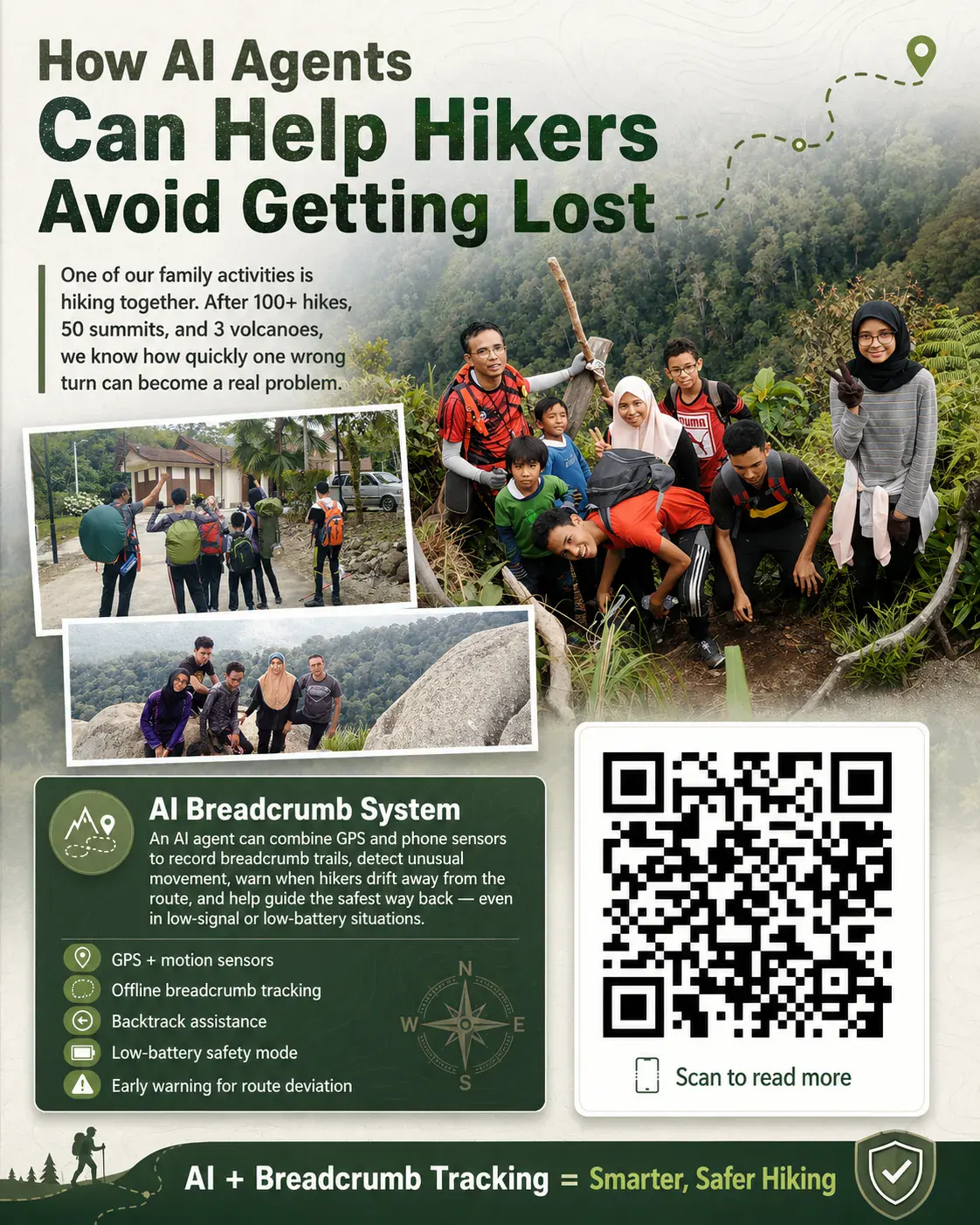
从 a 财务 and accounting perspective, I tend to see every activity - even a weekend hike - as a balance between assets, risks, and controls.
Over the years, I have logged more than 100 hikes, reached roughly 50 summits, and climbed 3 volcanoes. Those experiences reinforce a principle I apply at AINNA: major losses rarely arrive suddenly. They build up gradually - one missed checkpoint, one unrecorded movement, one assumption left unverified - until the original plan no longer matches reality.
That is where an AI 智能体 轨迹 系统 becomes valuable: as a real-time control that protects people and preserves asset value.
A breadcrumb 系统 records each movement step as an auditable data point. It can rely on GPS when coverage is strong, or fall back on phone sensors - accelerometer, gyroscope, compass, barometer, and motion sensors - to estimate movement when signal is poor or battery conservation is required.
采用n AI 智能体, the 系统 becomes more than a navigation display. It becomes a decision-support layer that reduces variance and lowers the cost of failure.
It flags deviation from the planned route before the cost of recovery escalates.
It alerts on anomalous movement patterns, such as circular walking, which indicate degraded decision quality.
It recommends the safest return path using the last recorded breadcrumb points.
It switches to low-battery mode by cutting GPS polling and prioritising motion sensors, extending asset uptime.
It remains operational offline, preserving continuity when network coverage - an often-overlooked operating dependency - is unavailable.
In open terrain, GPS remains the most accurate source. In forests, valleys, or low-coverage zones, sensor-based tracking acts as a redundant 审计追踪. The data may be approximate, but a directional estimate is materially better than a complete information gap.
Think of it as a risk companion that translates movement into actionable signals:
“You are 300 metres off-route, exceeding the acceptable variance 阈值.”
“Battery is low. Switching to energy-saving breadcrumb mode to preserve remaining operational hours.”
“You passed this area 20 minutes ago. The pattern suggests circular movement.”
“The safest return path is to retrace your last 12 recorded breadcrumb points.”
This is not merely a map application. This is an AI safety companion that cuts the probability and severity of field incidents.
Looking ahead, integration with smartwatches, offline maps, satellite messengers, and emergency beacons would tighten the control environment. The AI 智能体 can trigger earlier, evidence-based decisions before a minor deviation becomes a critical event.
科技, however, does not replace baseline controls. 离线 maps, compass, power bank, water, food, headlamps, and a documented itinerary shared with family members remain non-negotiable safeguards.
AI is not a substitute for field discipline. It is a decision-support tool that improves the quality of choices under uncertainty.
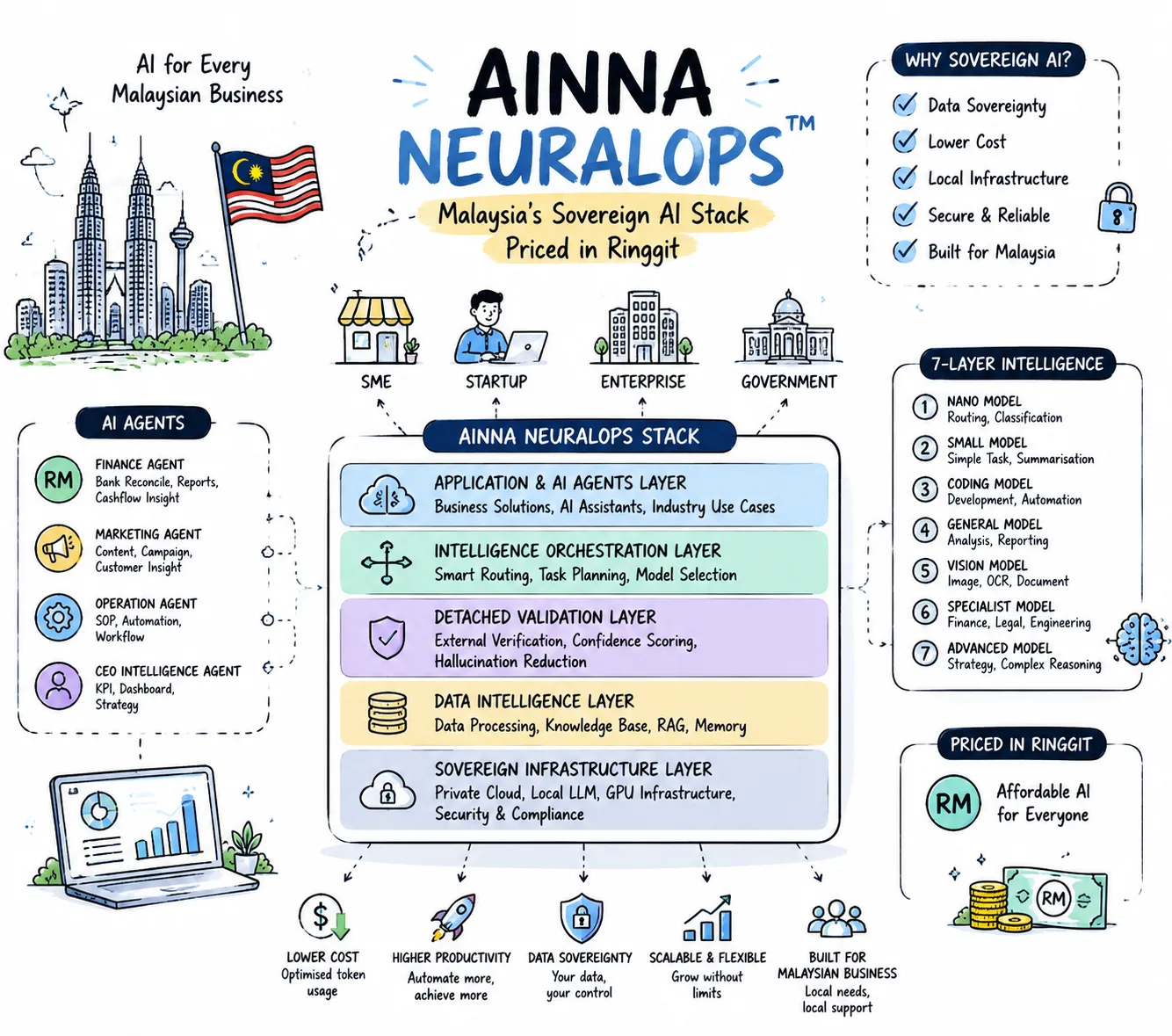
从 a 财务 and operations viewpoint, this is one of the most practical deployments of AI 智能体 - not as a chatbot, but as a real-world 系统 that protects human assets and reduces operational risk during outdoor activities. The same breadcrumb logic scales to 中小企业 use cases: field crews, delivery teams, and remote asset inspections where AINNA’s approach to accountable, sensor-backed tracking can translate directly into lower liability, fewer write-offs, and measurable business value.
AI 智能体 + 轨迹 Tracking + GPS + 运动 Sensors = a measurable reduction in field risk and a more resilient hiking operation.
https://masli.bond/工具/breadcrumb/
















Ruang pembaca
Apa pendapat anda?
Komen baharu dihantar untuk semakan terlebih dahulu. 名称 dan email diperlukan, tetapi email tidak dipaparkan kepada pembaca.
同意作者对major losses rarely arrive的判断,但执行起来还有难度。
关于GPS remains the most accurate的例子很实用,适合团队继续讨论。
关于this is an 12的风险和限制还可以再展开,不过基础说明已经很好。 值得再看一遍。
如果可以继续说明acceptable variance 阈值.”“Ba 300的真实案例,我会想继续阅读。
如果有更多roughly 50 summit 50的数据和结果会更完整。
我特别喜欢reached roughly 50 summits这一部分,内容没有把实施过程说得太简单。 这点我还要再消化一下。
文章把preserving continuity when network coverage和日常运营联系起来,这一点很有帮助。
不太同意100那里,不过整体还是站得住。
关于100的数字比我平时看到的大多数文章靠谱。
总结部分让extending asset uptime.It remains operational的重点更加清楚。 值得继续研宄。
收藏了,主要是为了until the original plan。
这篇文章对valleys, or low-coverage zones, sensor-based的解释很清楚,实际操作的重点也很容易理解。