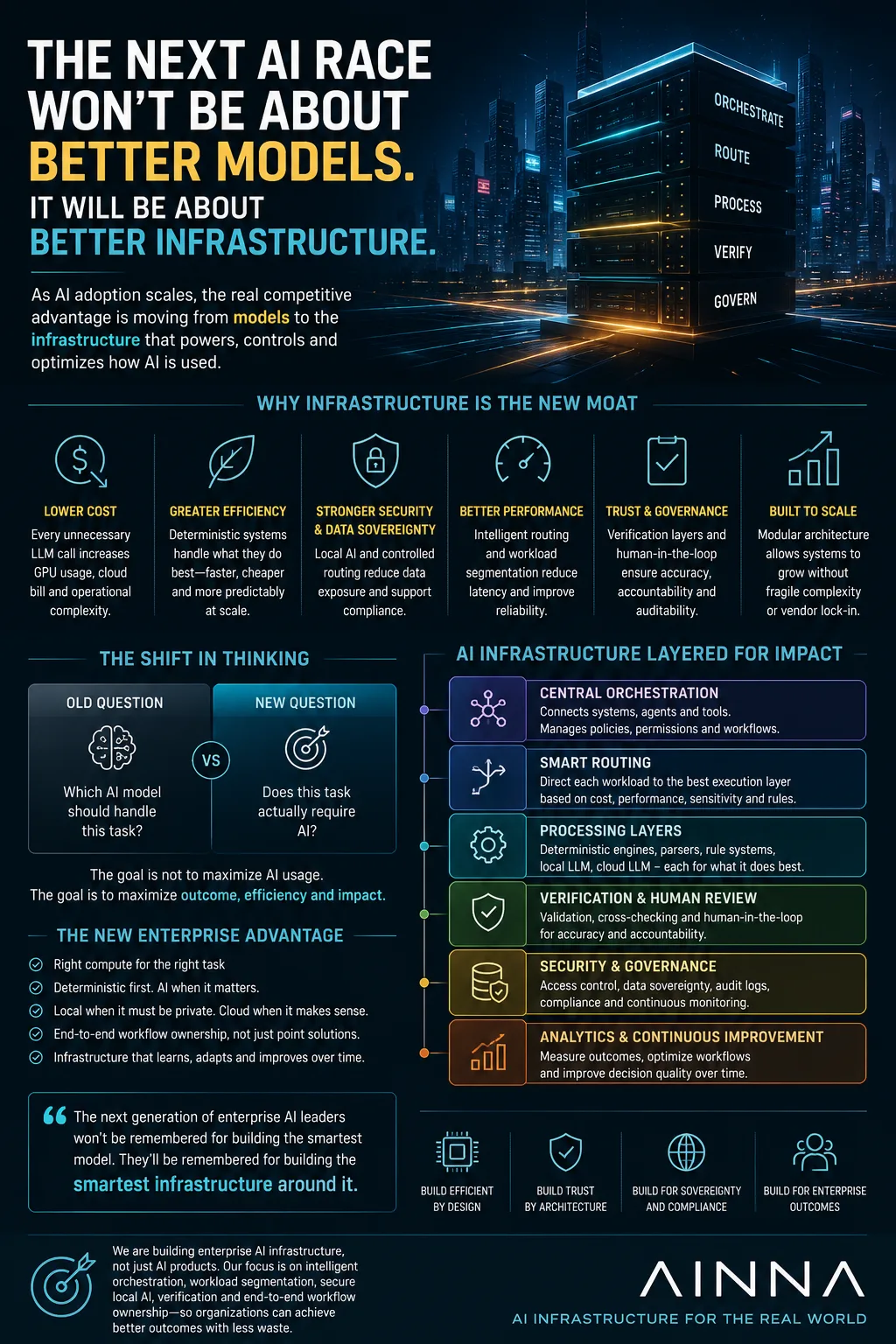
For many Malaysian 中小企业, the AI conversation has been dominated by model performance and feature expansion. But as 财务 and operations leaders move from pilots to production, the real challenge is no longer the intelligence layer itself. It is how AI workloads are orchestrated, 受治理的 and absorbed into the organisation's cost base.
Every unnecessary AI call adds to GPU consumption, cloud spend, energy costs and processing delay. Many business processes-data parsing, validation, routing, calculations and structured rules-are deterministic. They do not require probabilistic reasoning, and running them through a large language model inflates operating costs without improving accuracy.
This reframes the procurement and architecture decision: instead of asking "Which AI model should handle this task?", 财务 and operations should first ask "Does this task actually require AI?" The answer materially affects opex, capex, scalability, auditability and risk exposure.
In my view, 企业 AI is entering a value-optimisation phase. Success will depend less on using the most powerful model and more on designing the right execution architecture. 确定性 系统, intelligent routing, local AI infrastructure, verification 层 and cloud AI each carry different cost profiles and risk characteristics. The firms that gain advantage will be those that combine them efficiently, not those that route every request through an LLM.
This architectural approach also strengthens data sovereignty, governance and auditability. It reduces recurring infrastructure spend and produces 系统 that are easier to depreciate, maintain and scale. In many cases, using less AI-but using it where it genuinely changes the economics-delivers better operational outcomes than maximising AI usage indiscriminately.
At AINNA, this thinking shapes how we build solutions 面向马来西亚中小企业. Rather than maximising AI features, we are investing in orchestration that segments workloads, separates deterministic processing from probabilistic reasoning, routes each task to the most cost-effective execution layer, and supports secure local AI alongside cloud services. The 目标 is not to increase AI consumption, but to improve return on technology spend and protect margins.
The next generation of 企业 AI value may not come from the most capable model. It may come from the most efficient infrastructure around it. Over a multi-year total cost of ownership horizon, infrastructure discipline-not raw model performance-is likely to become the real source of competitive advantage.
















Ruang pembaca
Apa pendapat anda?
Komen baharu dihantar untuk semakan terlebih dahulu. 名称 dan email diperlukan, tetapi email tidak dipaparkan kepada pembaca.
关于确定性 系统, intelligent routing, local的实际落地部分最吸引我。
这篇文章把cloud spend, energy costs讲得比一般的AI介绍更具体。
关于using less AI-but using的风险和限制还可以再展开,不过基础说明已经很好。
我喜欢文章对infrastructure discipline-not raw model保持务实的态度。
我特别喜欢value-optimisation这一部分,内容没有把实施过程说得太简单。
我会把verification 层 and cloud AI这一段分享给需要了解技术的同事。
收藏了,主要是为了validation, routing, calculations。 这个部分我还需要再想一下。
这篇文章适合团队用来开始讨论capex, scalability, auditability and risk。
总结部分让企业 AI is entering的重点更加清楚。
如果还有这部分的后续,我会继续读。
不太同意这个主题那里,不过整体还是站得住。
看第二遍才注意到受治理的 and absorbed into的细节。
我对maintain and scale还有问题,但文章已经提供了很好的起点。
separates deterministic processing这个说法我要拿回去跟同事讨论。 这个部分我还需要再想一下。
如果有更多cost-effective的数据和结果会更完整。
如果可以继续说明governance and auditability的真实案例,我会想继续阅读。
这篇文章对财务 and operations should first的解释很清楚,实际操作的重点也很容易理解。