
Right now, I am shipping about three detached 系统 per day and around four complete pitch decks per week, with AI 智能体 doing most of the heavy lifting.
Across dev, research, code generation, testing, documentation, analysis and iteration, the AI workload in my environment can hit 3–5 billion 令牌 per month.
If I routed all of that through commercial premium LLM API pricing, the equivalent burn could easily reach hundreds of thousands of ringgit monthly.
Now scale that into a corporate environment.
Picture an organisation with hundreds or thousands of employees, each running AI 智能体 for research, analysis, reporting, coding, documentation, operations and decision support.
令牌消耗 scales hard.
At the same time, enterprises have little choice but to deploy AI 智能体.
Why?
Because lean teams like ours can now ship at a level that used to require hundreds or even thousands of people.
AI is collapsing the productivity gap between small teams and large corporations.
But there is an engineering side to this.
AI productivity does not have to mean a massive inference bill.
In my stack, even at around 3 billion 令牌 per month, direct AI cost stays around RM100–RM200 monthly.
The difference is not that we use less AI.
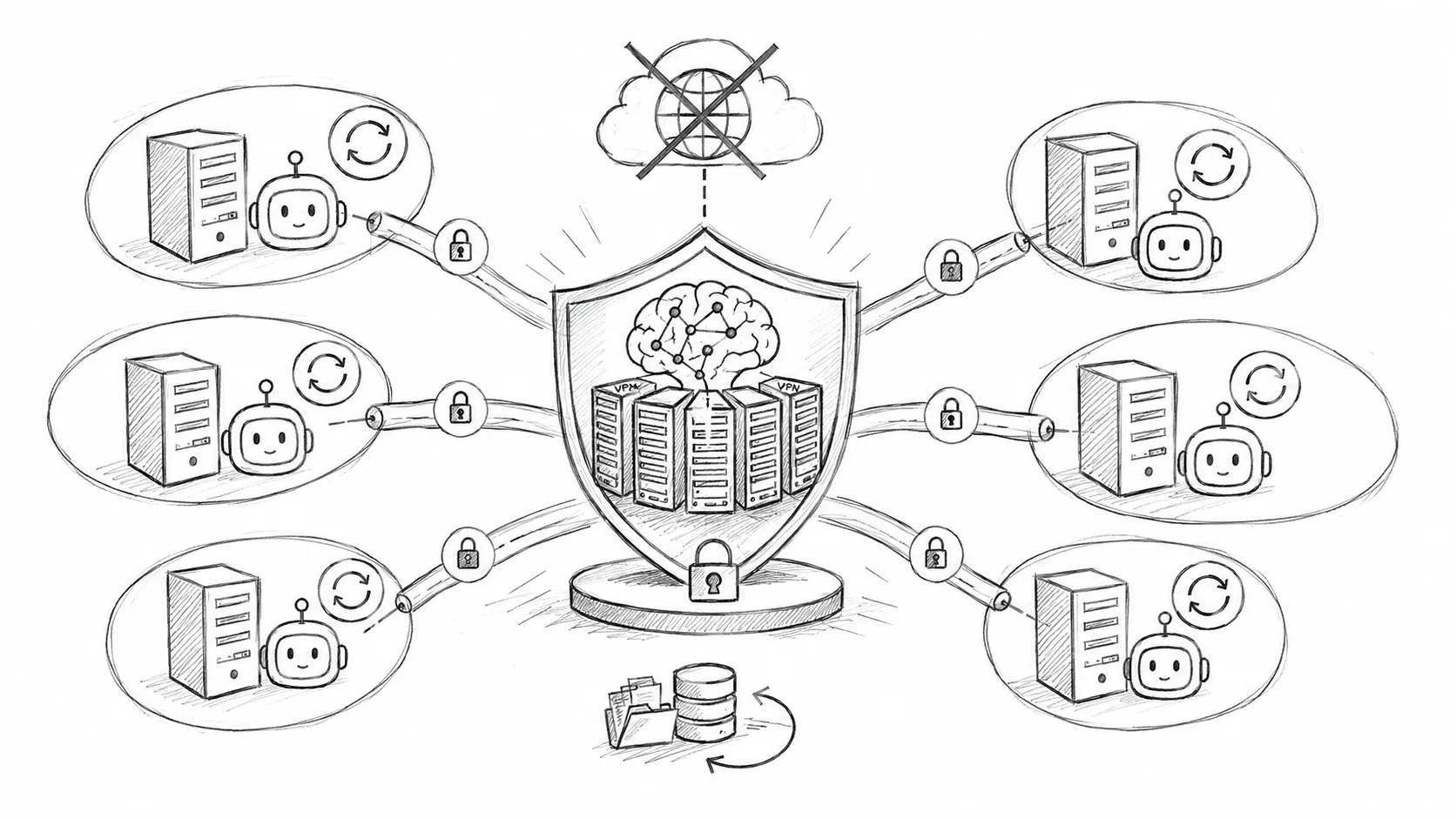
It is because we built a 智能路由 layer around the agent pipeline.
Not every inference call needs the biggest, most expensive model.
Simple tasks → 轻量模型s.
Coding tasks → specialised models.
复杂推理 → stronger models.
确定性 validation → detached 系统.
Repetitive processing → automation and conventional compute.
The engineering principle is simple:
Burn premium intelligence only when the task actually requires it.
Our detached 系统 handle validation, calculations, filtering, reconciliation, rule-based decisions and structured processing - none of which need an LLM.
That lets us run AI aggressively without pricing every request like it needs the top-tier model.
For me, the future of 企业版 AI is not just:
“Give every employee an AI agent.”
It has to be:
“Give every employee an AI agent - but build intelligent infrastructure underneath it.”
Because when an organisation has 1,000 or 10,000 AI-enabled employees, the question is no longer whether AI is being used.
The real question becomes:
How much intelligence is the organisation paying for that it never actually needed?
That is why I treat 智能路由, specialised models and detached 系统 as more than optimisation.
They are becoming AI cost-control infrastructure.
At 企业 scale, that difference can be worth millions of ringgit per year.
The next phase of AI adoption will not be about owning the most powerful models.
It will be about knowing when not to route a request to them.
#ArtificialIntelligence #AIAgents #EnterpriseAI #SmartRouting #NeuralOps #自动化 #DigitalTransformation #AIInfrastructure #LLM #生产力
















Ruang pembaca
Apa pendapat anda?
Komen baharu dihantar untuk semakan terlebih dahulu. 名称 dan email diperlukan, tetapi email tidak dipaparkan kepada pembaca.
这篇文章把analysis, reporting, coding, documentation讲得比一般的AI介绍更具体。
关于none of which need的风险和限制还可以再展开,不过基础说明已经很好。
如果有更多real question becomes:H 10,000的数据和结果会更完整。
同意作者对not that w RM200的判断,但执行起来还有难度。 值得再看一遍。
3–5 billion 令牌 5 billion这个说法我要拿回去跟同事讨论。
我会把right now, I am shipping这一段分享给需要了解技术的同事。
这篇文章适合团队用来开始讨论direct AI cost stays around。 这个部分我还需要再想一下。
关于operations and decision support.令牌消耗 scales的例子很实用,适合团队继续讨论。
如果可以继续说明enterprises have little choice的真实案例,我会想继续阅读。
视觉和结构让calculations, filtering, reconciliation的概念更容易掌握。