For many SMEs, the biggest accounting challenge is not simply calculating profit and loss. The real problem is scattered data. 销售 come from different platforms, payments flow through multiple bank accounts, supplier costs are recorded separately, refunds happen through customer service, and loans sometimes get mixed up with business income. 时间 it is time to prepare the 利润 and Loss 状态ment and 资产负债表, the process becomes slow, messy, and exposed to errors.
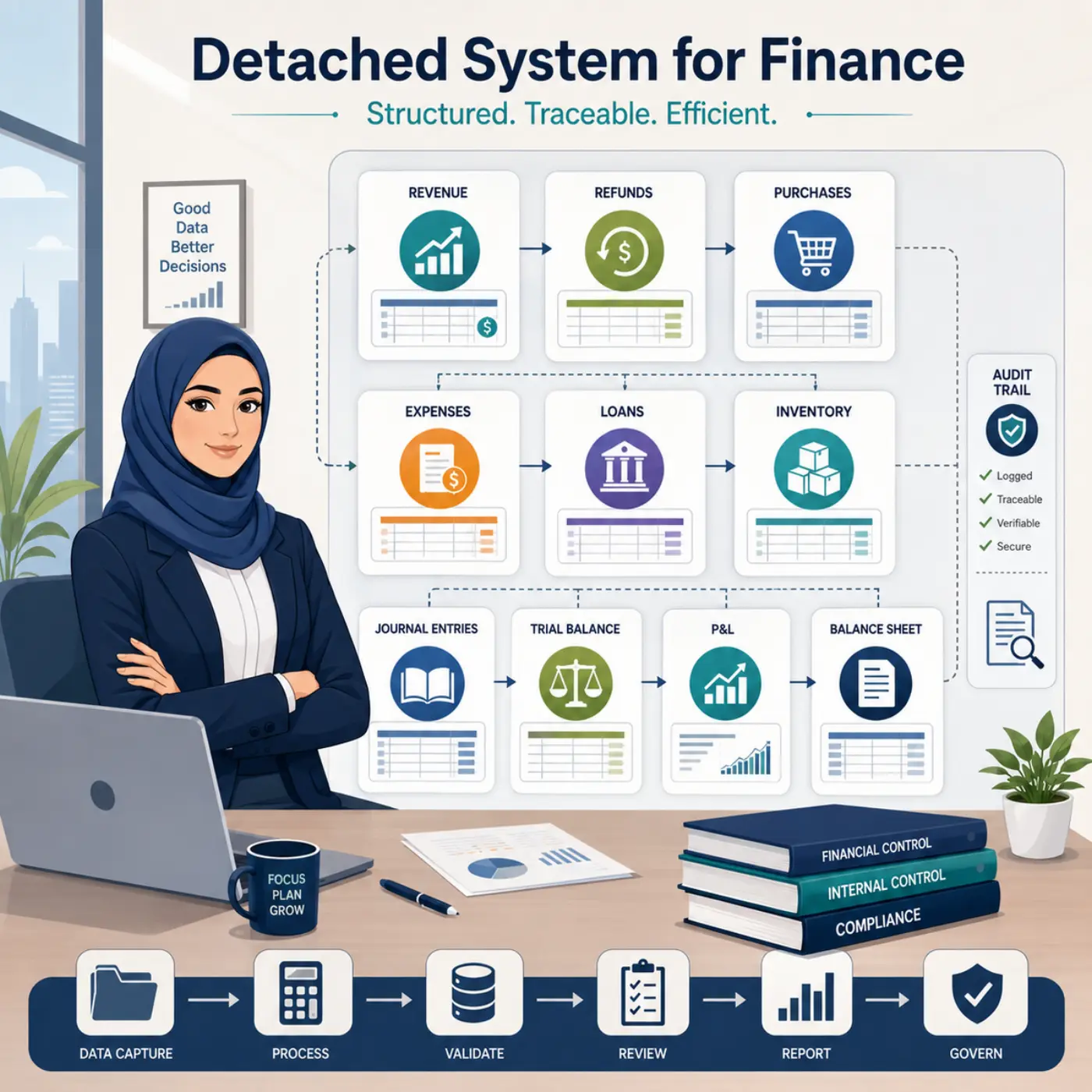
This is where the 独立系统 becomes useful for 财务 operations. A 独立系统 is not just another accounting 系统. It is a modular approach where each accounting function is separated into smaller, focused 系统s. For example, one module can manage sales, another handles purchases, another tracks expenses, another records refunds, another manages loans, and another generates reports. Each module works independently, but the data can still be combined into a complete financial report.
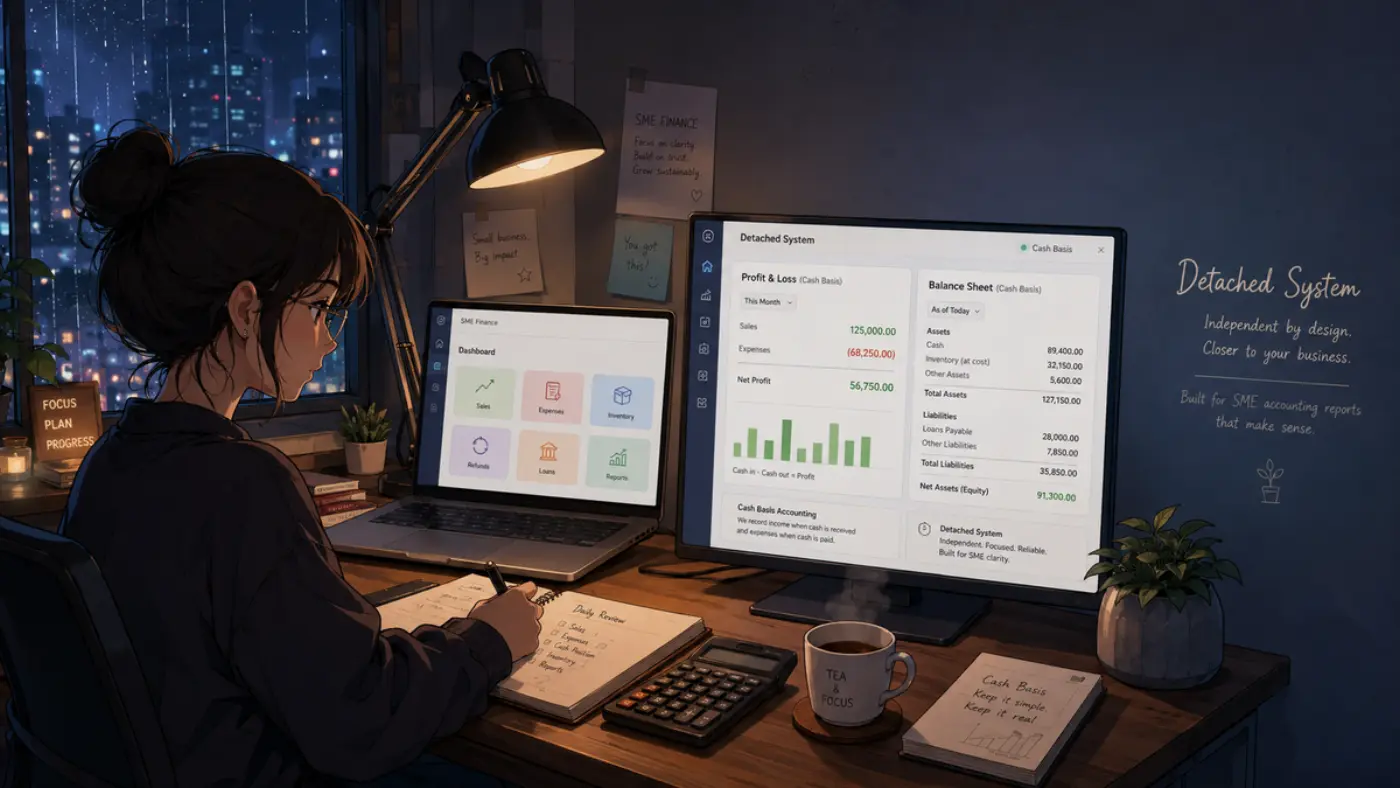
For SMEs using cash basis accounting, this approach is practical and efficient. 现金 basis accounting records transactions only when money actually comes in or goes out. This means the 系统 focuses on real cash movement: sales received, supplier payments made, operating expenses paid, customer refunds issued, loan money received, and loan repayments made. For SME consumer businesses, especially those involved in e-commerce, marketplace selling, dropship, ready stock, COD, and pre-order models, this method is easier to manage and closer to real business activity.
采用 独立系统, preparing a 利润 and Loss 状态ment becomes more structured. 营收 can be separated from loan inflows so that borrowed money is not wrongly recorded as sales. 定制er refunds can be treated properly as a reduction of revenue. 成本 of goods sold can be calculated using opening stock, purchases, and closing stock. 支出 can be grouped into clear categories such as salaries, rental, utilities, postage, advertising, platform fees, transportation, and 财务 costs. As a result, SME owners can see the true performance of the business: actual sales, gross profit, operating costs, and net profit.
For a cash basis 资产负债表, the 独立系统 also helps separate business cash, assets, liabilities, and equity. 结束 stock can still be shown as an asset. 未结款项 loans can be presented as liabilities. 现金 and bank balances can be shown as current assets, while drawings and retained earnings can be reflected under equity. Even when an SME uses cash basis accounting, the 资产负债表 should still present the financial position of the business in a way that is logical and useful for owners, banks, auditors, or tax purposes.
The biggest advantage of a 独立系统 is that it reduces repeated manual work. The 财务 team does not need to review every transaction from the beginning each time a report is prepared. If they need to check refunds, they can review the refund module. If they need to review loans, they can open the loan module. If they need to verify cost of goods sold, they can refer to the stock and purchases module. This saves time, reduces double counting, and makes the review process much easier.
For SME consumer businesses, this kind of 系统 is no longer a luxury. It is becoming an operational necessity. 商业es move too fast to wait months for financial reports. 所有者s need to know their cash position, margins, stock value, and profit quickly. A 独立系统 helps the 财务 team produce reports that are clearer, faster, and more reliable without needing to build one large and expensive accounting platform.
In conclusion, the 独立系统 is a modern way for SMEs to manage accounting reports in a lighter but more 系统atic manner. It does not replace accountants or 财务 teams. Instead, it helps them work smarter. For growing SMEs, financial reports are not just year-end documents. They are decision-making 工具. 时间 data is organized properly, the 利润 and Loss 状态ment becomes more accurate, the 资产负债表 becomes clearer, and business owners can understand the real financial position of their company without getting lost in messy numbers.