In 财务, the real problem is not just calculating profit and loss. The bigger problem is scattered data, mixed transactions, inconsistent categories, delayed documentation, and the painful need to re-check everything from the beginning whenever one figure changes.
This is where the idea of a 独立系统 becomes highly relevant.
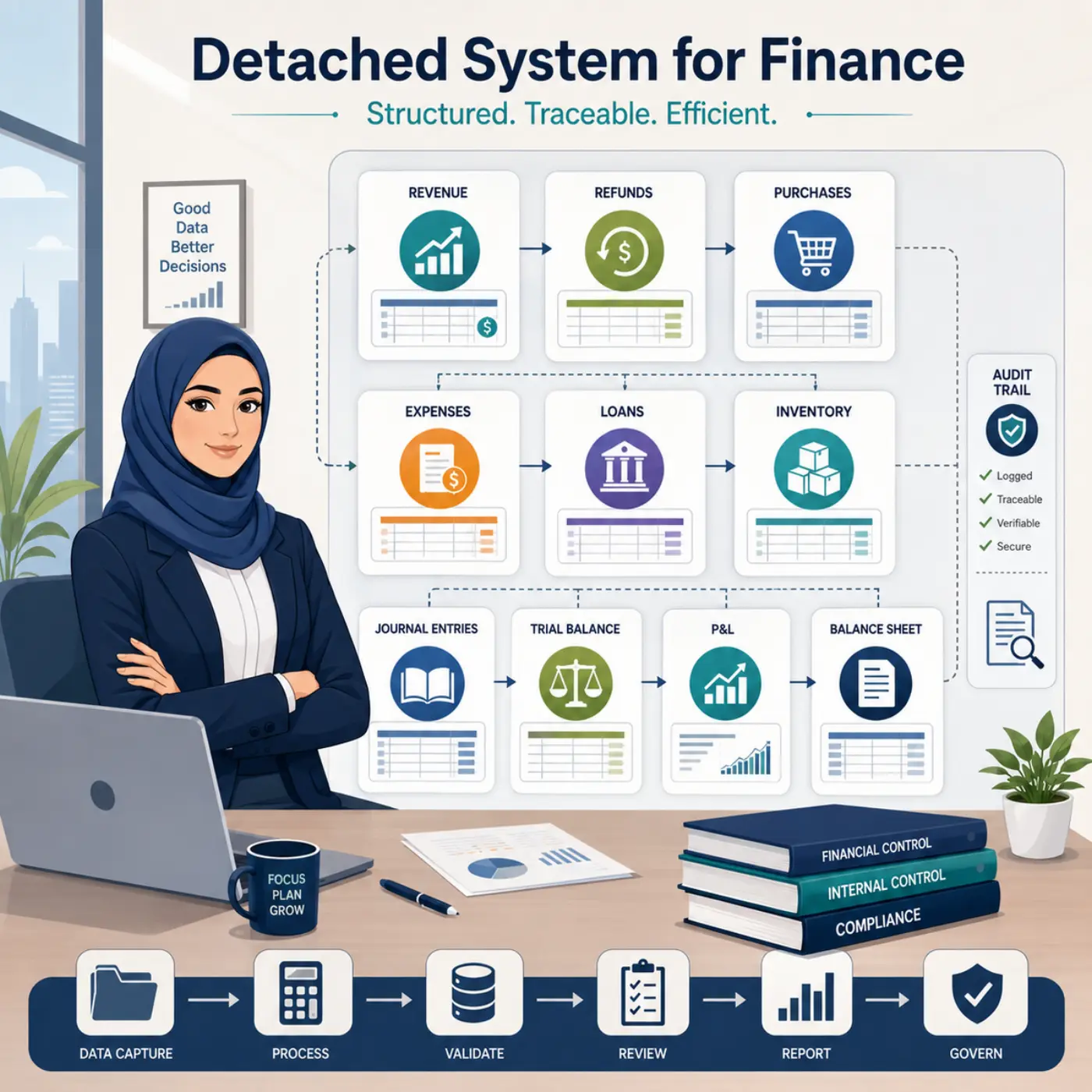
To me, a 独立系统 is not just automation. It is a structured way of breaking a large 财务 process into smaller, controlled, auditable sections. 营收, refunds, purchases, expenses, loans, inventory, journal entries, trial balance, profit and loss, and balance sheet should not all be mixed into one messy workflow. Each section should have its own function, reference, and control.
In 财务, this matters because one small number can affect the whole report. If a 系统 has to read and process everything again just to make one small change, the risk of misinterpretation becomes higher. But when the process is broken into clear sections, we can focus only on the part that needs attention. If we need to review refunds, we go to the refund section. If we need to review loans, we go to the loan section. If we need to adjust closing stock, only the inventory section is touched. 清理er, faster, safer.
What I like about 独立系统 is that it brings 财务 closer to proper audit discipline. Every change can be 已跟踪. Every number has a source. Every adjustment can be marked as confirmed, pending verification, or not allowed. This is not just about making accounting work easier. It helps reduce the risk of wrong reporting, double counting, wrong expense classification, or accidentally putting balance sheet items inside the profit and loss statement.
For SMEs, this is a big deal. Many small businesses still depend on manual Excel files, WhatsApp messages, bank statements, marketplace reports, and separate notes. At the end of the year, everything is forced together. The 财务 team then becomes like firefighters - fixing numbers, searching for evidence, correcting classifications, and trying to understand old transactions all over again.
独立系统 can change that. 财务 does not have to work re激活ly all the time. It can become more structured from the beginning.
AI also becomes more useful when it works together with a 独立系统. AI does not need to read one huge file repeatedly. It only needs to refer to the relevant section. This reduces token usage, lowers cost, speeds up response time, and most importantly, reduces the risk of AI giving inaccurate answers because too much context is mixed together.
For 财务, this is critical. We are not looking for creative guesses. We need answers that are accurate, traceable, reviewable, and defensible.
独立系统 does not replace the 财务 team. It strengthens the 财务 team. 人类 judgment is still important, especially when deciding tax treatment, expense add-back, loan treatment, inventory movement, depreciation, compliance, and reporting policies. But repetitive work, data structuring, pattern checking, and process separation can be supported by a better 系统.
At the end of the day, strong 财务 is not just about who can calculate faster. Strong 财务 is about structure, data discipline, control, and a process that can scale.
For me, 独立系统 is a step in that direction. It does not only make reporting faster. It makes 财务 more ready for audit, tax submission, funding, growth, and better decision-making.
SMEs do not always need expensive 系统s to become more professional. Sometimes, what they need is a smarter way of working: break the process, control the data, keep proper references, and make sure every number has a clear story behind it.