
从 a 系统 standpoint, forests are among the most valuable distributed assets a country can monitor. They regulate climate, store carbon, protect water resources, preserve biodiversity, and maintain ecological balance.
The biggest engineering challenge in forest monitoring is not just getting the data out - it's deploying the hardware, radios, and power 系统 without disturbing the ecosystem you're trying to 测量.
At AINNA, we're building a low-impact 森林 智能 平台 - a field-deployed sensor and DAQ network designed to operate inside forest environments with minimal ecological footprint.
The 系统 architecture focuses on:
- Minimal 物理足迹 and non-intrusive installation
- Ultra-low-power sensor operation and power-aware scheduling
- Long-duration autonomous monitoring without field crews
- 实时 environmental telemetry and event detection
- 远程 monitoring capability across challenging forest terrain and canopy cover
We engineer the platform for continuous environmental data collection over extended deployments - typically up to one year or more, depending on the sensor payload, sampling rate, power budget, and local deployment conditions.
That autonomy lets research teams and forest authorities track long-term ecosystem trends without repeatedly sending crews into sensitive zones or laying down permanent infrastructure.
On the communications side, the network is built to span several kilometres up to tens of kilometres - roughly 10 km to 30 km range depending on topology, antenna height, and link budget - which opens up monitoring of remote 站点 that are hard to reach by conventional ground access.
The platform integrates multi-parameter sensing across these 领域:
🌳 气候: temperature, humidity, rainfall, wind, atmospheric pressure
🌱 碳: CO₂ concentration, carbon absorption indicators, air quality, ESG-grade data
🌿 土壤: moisture, temperature, pH, and overall ecosystem health markers
💧 水务: pH, dissolved oxygen, turbidity, river and watershed health
🦜 生物多样性: wildlife activity, acoustic signatures, species presence and behaviour
🔥 防护: fire indicators, environmental anomalies, and illegal activity detection
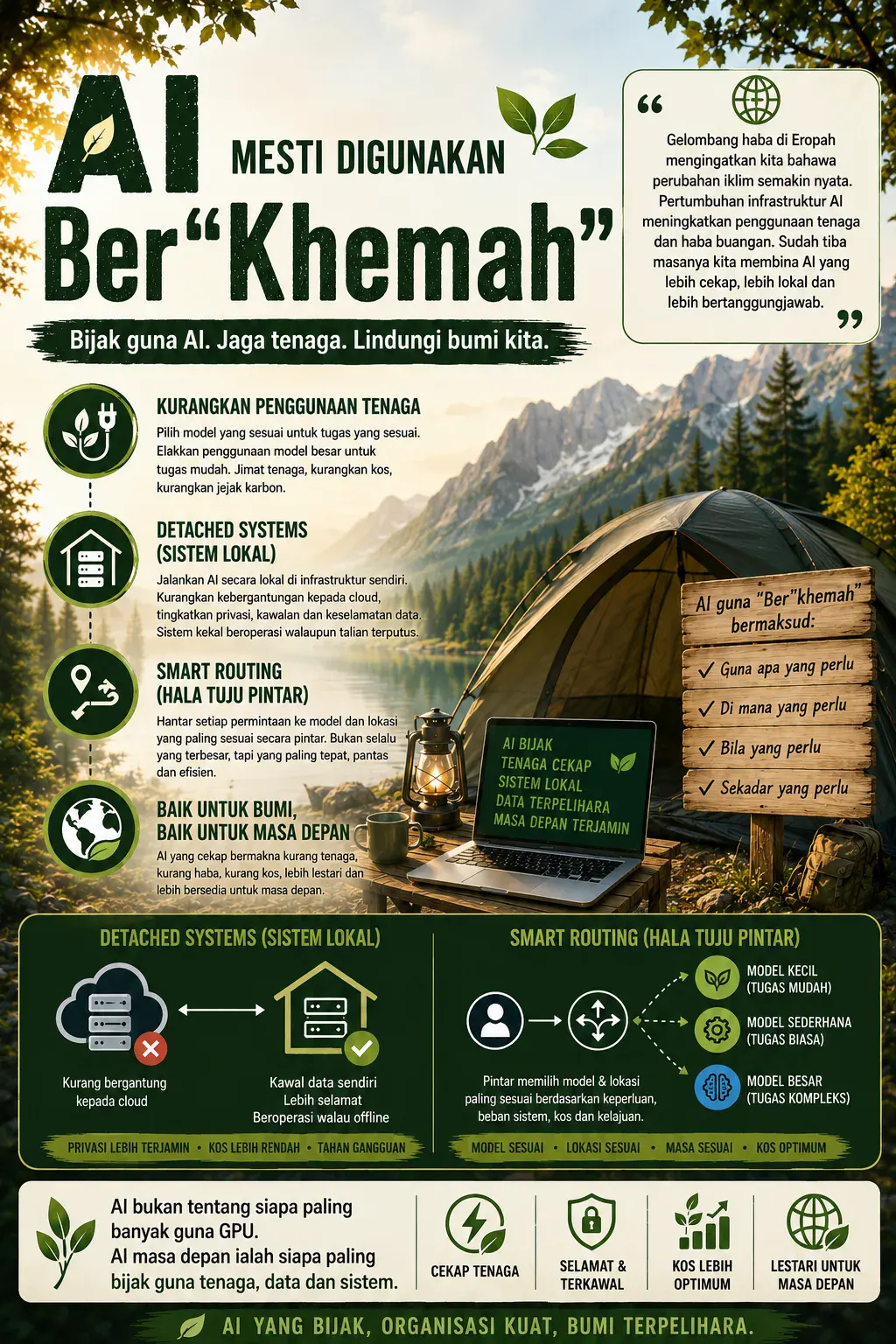
Raw telemetry is turned into operational intelligence through AINNA NeuralOps - our orchestration layer that uses smart AI routing, specialised AI 智能体, 分离式处理 系统, and automated validation pipelines.
Instead of running heavy AI models on every edge node, NeuralOps routes advanced inference only where it's needed - cutting unnecessary computation, reducing energy draw on remote power 系统, and keeping the platform viable for 24/7 environmental intelligence.
从 a deployment perspective, the next generation of conservation 系统 isn't about adding more hardware into nature.
It's about building intelligent, low-impact 系统 that let the forest report its own state through continuous, validated data streams.
AINNA 森林 智能 平台 - Field 系统 that listen to nature, powered by sustainable AI.
#AI #NeuralOps #ESG #ClimateTech #SmartForest #可持续发展 #ConservationTechnology















Ruang pembaca
Apa pendapat anda?
Komen baharu dihantar untuk semakan terlebih dahulu. 名称 dan email diperlukan, tetapi email tidak dipaparkan kepada pembaca.
文章把sampling rate, power budget和日常运营联系起来,这一点很有帮助。
这篇文章适合团队用来开始讨论antenna height, and link budget。
视觉和结构让we're building a low-impact 森林的概念更容易掌握。
我会把antenna height, an 30 k这一段分享给需要了解技术的同事。
关于hardware into n 24的实际落地部分最吸引我。 这点我还要再消化一下。
我特别喜欢store carbon, protect water resources这一部分,内容没有把实施过程说得太简单。
这篇文章把which opens up monitoring讲得比一般的AI介绍更具体。
关于minimal 物理足迹 and non-intrusive installation的风险和限制还可以再展开,不过基础说明已经很好。
这篇文章对typically up的解释很清楚,实际操作的重点也很容易理解。
如果可以继续说明🌳 气候: temperature, humidity, rainfall的真实案例,我会想继续阅读。
收藏了,主要是为了it's deploying the hardware, radios。
不太同意10 k那里,不过整体还是站得住。 这点我还要再消化一下。
先存起来,主要是为了10 k。
看第二遍才注意到preserve biodiversity, and maintain ecological的细节。
同意作者对depending on the sensor payload的判断,但执行起来还有难度。
我喜欢文章对topology, antenna h 10 k保持务实的态度。